
Vietnam's Retail Investors Aren't Gamblers. The System Made Them Into One.
Vietnam's stock market trades like a casino not because of who is playing, but because a broken savings infrastructure has made short-term speculation the only rational move available to the professional class.
The VN-Index gained around 50 percent in the past year. Retail investors absorbed more than $2.4 billion in foreign selling and drove it there. Daily trading on HOSE runs around $800 million. The story the market tells about itself is one of democratic participation: more Vietnamese than ever are putting savings to work, building wealth, engaging with capital markets on their own terms. All of that is accurate.
What it does not explain is why 84 percent of those investors check the market multiple times a day. Why the average holding period halved between 2019 and 2021. Why the Securities Commission has flagged this mass participation as a structural constraint on market depth rather than a sign of health. Or why VinaCapital, in its July 2024 research, described retail enthusiasm for stocks not as financial sophistication but as a direct consequence of deposit rates below 5 percent and a frozen real estate market.
The question is not whether Vietnamese retail investors are active. They are. The question is why they are active in exactly this way, and whose fault that is.
The short version
Vietnamese retail investors are not short-term and speculative because they are reckless or financially illiterate. They are short-term because every alternative savings vehicle available to the professional class either destroys value slowly or is structurally out of reach. Housing costs more than any realistic savings rate can close. Deposits run below inflation. Developer bonds defaulted at a 22.54 percent rate in the real estate sector and burned retail holders badly in 2022 and 2023. Gold offers no yield, just timing. So the rational actor puts money into equities and trades fast, because the lesson every other vehicle taught is that patience is how you lose. That is not a character flaw. It is a learned and correct response to a broken system. The problem sharpens in September 2026, when FTSE Russell's upgrade brings an estimated $1.7 billion in institutional inflows into a market priced almost entirely on retail sentiment. When fundamentals-based money reprices a sentiment-driven market, someone absorbs the correction. Based on how this has played out in comparable upgrades, that someone is the retail investor who bought on momentum and is holding on margin.
The official story
The Securities Commission of Vietnam has acknowledged what the data shows. Retail participants, the SSC noted in its most recent securities law review, "tend to focus on shorter-term, speculative trading rather than long-term investment." The commission flagged this as a structural constraint on market depth, a problem of investor maturity that education and market development would, over time, correct.
This is a coherent position with historical support. Korea in the 1980s, Taiwan in the 1990s, China in the 2000s: high retail participation, high turnover, elevated volatility, a gradual shift toward institutional dominance as pension systems deepened and regulatory frameworks matured. The developmental narrative applied to Vietnam predicts that the current retail-dominated market is a phase, not a feature.
The problem with this narrative is not that it is wrong about the behavior. It is wrong about the cause.
The savings desert

To understand why Vietnamese retail investors trade the way they do, go through the alternatives.
Housing. A median salaried worker in Ho Chi Minh City faces a price-to-income ratio that makes long-term saving toward a down payment mathematically losing. Prices compound faster than any realistic savings rate. An earlier piece in this series ran the numbers in full; the short version is that the office worker cannot win by waiting. Housing is not a savings vehicle for the professional class. It is the destination of capital that was already there before you started earning.
Bank deposits. As of mid-2024, 12-month term deposit rates were running below 5 percent. Against real inflation, holding cash in a bank account was a slow, quiet destruction of value. VinaCapital made the causal link explicit: deposit rates below 5 percent and a frozen real estate market are the structural cause of retail money moving into stocks and gold. Not chosen. What remained.
Corporate bonds. The developer bond market provided the harder lesson. FiinRatings documented a 22.54 percent default rate in the real estate sector. That figure was not abstract. Retail bondholders absorbed real losses during the Vạn Thịnh Phát collapse and the events around SCB in 2022 and 2023. The lesson those events taught was specific and durable: long-term fixed-income instruments sold to retail investors in Vietnam are not a store of value. They are a transfer of developer risk onto people who cannot price it.
Gold. Gold offers no yield. Owning gold is a bet on price direction, nothing more. Whether the vehicle is gold or equities, the holder is speculating on price. Gold simply does not feel like speculation because it is older and more familiar. The underlying structure is identical.
Work through the list and the same conclusion arrives each time. Equities are not the preferred savings vehicle. They are the only one left that does not come with an obvious reason to expect it to fail you.
Deposits pay 4.7%. HCMC rents rose 28%. The math explains everything.
Approximate annual returns and cost changes, 2024–2025. Deposit rate: 12-month term. Gold return is estimated year-on-year; VN-Index gain as of April 2026.
Sources: VinaCapital (deposit rate); GSO Vietnam (CPI); Savills Vietnam / VietnamNet (rent); Trading Economics (VN-Index); Vietnam.vn (gold)
The behavioral record

A 2024 paper in the International Journal of Social Science and Human Research, drawing on a Dynam Capital and Indochina Research survey of Vietnamese retail investors from late 2021, put numbers to what the market was producing. Eighty-four percent of respondents checked the market multiple times daily. Fifty-four percent traded at least once a week. Holding periods between 2019 and 2021 fell by half or more.
The pattern underneath the turnover data is worse than the turnover itself. Research on Vietnamese retail investor behavior, including a peer-reviewed study published in PMC drawing on 621 investors, documented the disposition effect at scale: investors sell winning positions too early and hold losing ones too long, sitting through full drawdowns while capturing only part of the upside. The upside is partially taken. The downside is absorbed in full.
The covid years didn't create this orientation. They amplified it. Vietnam ranked first globally in Chainalysis' 2021 Global Crypto Adoption Index, with around 21 percent of Vietnamese reporting they owned cryptocurrency. The pattern was regional: the IMF documented rising crypto-equity volatility spillovers specifically in Vietnam and Thailand during the same period, and a separate study tracking Indonesia, the Philippines, and Thailand found crypto returns directly influencing stock market activity across all three markets. The behavioral patterns those markets reward are the same ones the behavioral data shows in Vietnamese equities: monitoring prices around the clock, trading on momentum, capturing gains before the next move. The habits weren't new. The markets that rewarded them had just grown considerably larger.
Survivor bias sits on top of all of this. The investor who made money is loud about it. The thousands who did not are not. In a retail-dominated market without institutional depth, peer networks become price signals. The information circulating through friend groups and office conversations skews toward winning trades. In a market where 90 percent of daily volume is retail and individual conviction moves prices, that social layer is not noise. It is part of how prices actually get set.
The SSC is not wrong that retail participants are speculative. It is treating the symptom as the disease.
The comparison that matters
The temptation is to compare Vietnamese retail investors unfavorably to American ones. Resist it. GameStop happened. Zero-day options exist. Meme stocks are a genre. The question is not which market has more speculation. Both have plenty. The question is where the speculation sits in the system.
In the United States, around 21 percent of households directly own individual stocks, according to the Federal Reserve's 2022 Survey of Consumer Finances. The majority of American equity exposure, roughly 37 percentage points of the 58 percent total household equity participation, is held through retirement accounts, pension funds, and index funds. Most Americans with equity exposure have never looked at an order book. Their capital is managed by intermediaries whose time horizons are measured in years or decades, and whose pricing is driven by fundamentals rather than sentiment.
Vietnam has no equivalent buffer. When retail sentiment moves in Vietnam, prices move. There is no institutional counterweight to absorb volatility, dampen overreaction, or provide liquidity that stabilizes a drawdown. Retail emotion in the United States is buffered by an infrastructure that most retail participants never interact with. Retail emotion in Vietnam moves the index.
90% of daily trading volume on HOSE is retail. There is no institutional buffer.
Share of daily trading value, HOSE 2024. Source: VinaCapital Insights, July 2024.
Source: VinaCapital Insights (July 2024)
Vietnamese investors are not more emotional than American ones. They are more exposed, because the infrastructure that would absorb their emotion does not exist here yet.
The September question
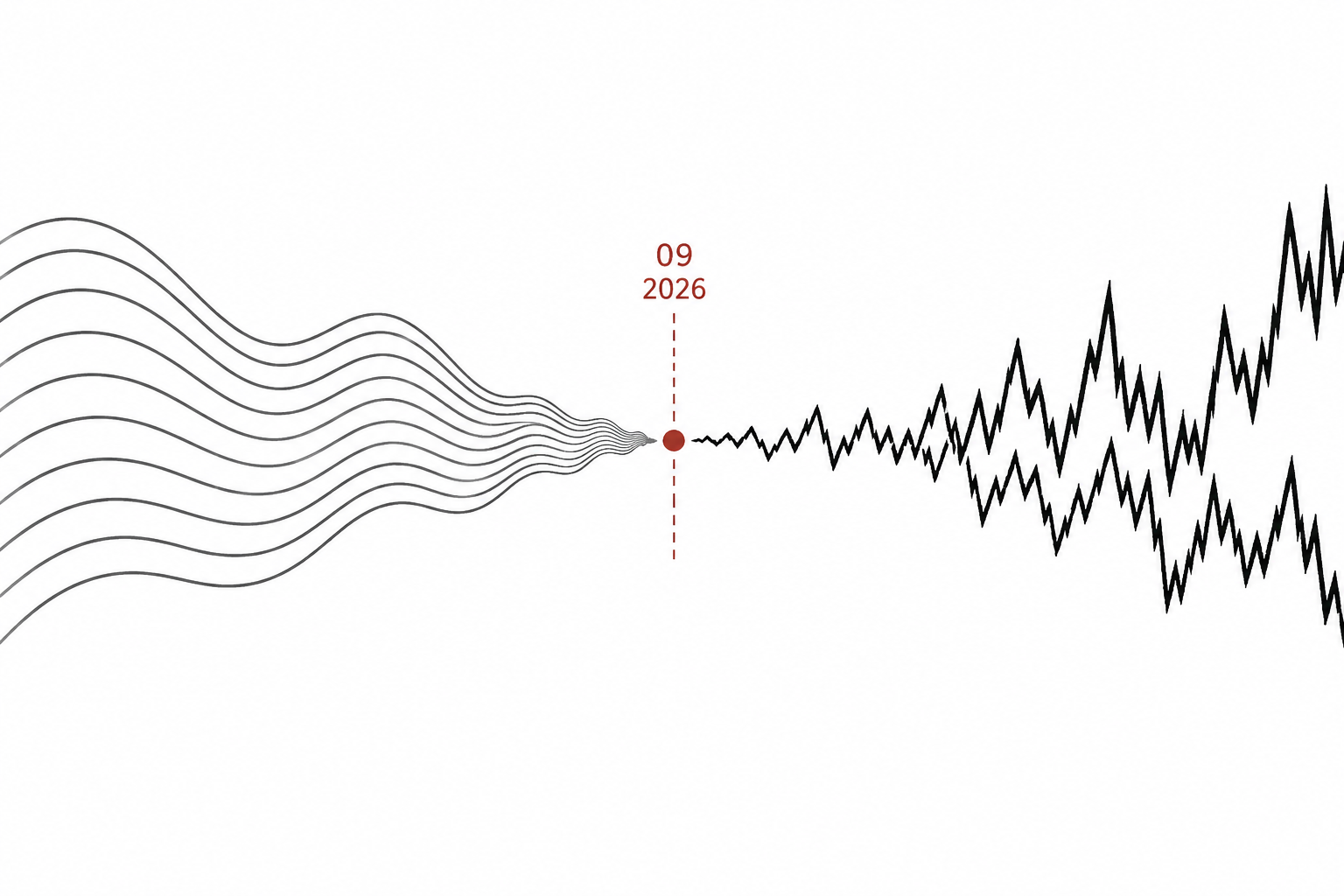
On September 21, 2026, FTSE Russell's upgrade of Vietnam to emerging market status takes effect. The estimated inflow at inclusion from FTSE rebalancing alone is $1.7 billion, with additional active fund allocations expected to follow as regional funds adjust their Vietnam weightings. The KRX trading platform, launched May 2025, removed the primary operational barrier that had kept Vietnam in the frontier category for years.
This is good for the market in aggregate. Foreign institutional capital, priced on fundamentals, deepens liquidity, improves price discovery, and begins to reduce the retail dominance the SSC has correctly identified as a structural weakness. The upgrade is the beginning of that process.
The distribution of who benefits in the short term is a different question.
SSI Research documented the setup: average daily trading on HOSE hit 40 trillion đồng in Q3 2025, double the 2024 average. The VN-Index has gained around 50 percent year on year as of late April 2026, climbing from a 52-week low of 1,137 to a high of 1,918 before settling near 1,870. HSBC has flagged the risk directly: front-loading before index inclusion, followed by profit-taking after, is the pattern in comparable emerging market upgrades. Prices rise as passive and active funds position ahead of the rebalancing date. Then they fall as those funds take profits, and retail investors who bought on momentum are left holding.
The rally is real. September 21, 2026 is the date that changes the rules.
VN-Index key levels, 2025–2026. January 2025 and April 2025 figures derived from published annual and 52-week range data. September 2026 marks FTSE inclusion date.
Sources: VinaCapital Insights; Trading Economics (April 24, 2026); SSI Research. Intermediate points estimated.
The top beneficiaries at inclusion, per SSI, are likely VNM, VHM, VIC, HPG, VCB, SSI, and MSN: stocks with meaningful index weights and sufficient liquidity for institutional-scale positions. They are also the stocks that retail investors on margin have been buying through the front-loading rally.
The question is not whether the long-term trajectory is positive. It is. The question is what happens in the window between the institutional front-load and the post-inclusion correction, and which investors are on the wrong side of it when fundamentals-based money reprices a market that has been running on sentiment.
What to watch
- Post-inclusion VN-Index behavior. If the index corrects more than 15 percent in the 90 days following September 21, 2026, the front-loading thesis is confirmed and retail margin holders absorb it. Watch margin lending data from SSI, VND, and VCSC for exposure size going into inclusion.
- Deposit rate trajectory. If 12-month term deposits return to 6 to 7 percent with real positive yield, the structural logic pushing retail into equities weakens at the margin. Watch SBV rate decisions against each CPI print.
- Institutional share of daily volume. HOSE publishes this. If retail drops from 90 percent toward 75 to 80 percent in the 12 months following inclusion, the structural shift is beginning. If it does not move, the upgrade's effect on market structure has been overestimated.
- Developer bond market rehabilitation. If post-SCB reforms produce retail bond issuance with genuine investor protections and transparent pricing, the savings desert has one more exit. Watch SSC and VSD regulatory releases on retail bond eligibility.
The diagnosis
The market looks like a casino because it was built to function as one, not by design, but by default, when everything else stopped working.
Vietnamese retail investors are short-term not because they are reckless, but because the savings system taught them, correctly, that patience is how you lose. They are speculative not because they gamble by nature, but because every alternative vehicle has a documented track record of destroying value, defaulting, or being structurally out of reach. The behavior the SSC describes as a constraint on market maturity is a rational adaptation to an irrational environment.
Consider the retail investor who is long on margin through this rally, buying VIC or VHM or HPG on momentum that has doubled average daily trading volume since 2024, who has never watched institutional money reprice a market on fundamentals rather than sentiment. Who has been told, by everything the system has shown them, that the move is to buy the momentum and sell before the turn. That person has a date in the calendar now. September 21, 2026. They may not know what it means yet.
The FTSE upgrade will, over time, fix the structural conditions. Institutional participation will grow. Retail dominance will decline. Price discovery will improve. But structural change takes years, and the inclusion date does not. The professional class that has been using the stock market as a pressure valve, because the savings desert left them nowhere else to go, is about to have its first serious encounter with counterparties who play by completely different rules.
Who built this situation is a structural question with a long answer. Who will absorb the next correction is a shorter one.
Sources
| Source | What it provides |
|---|---|
| "Characteristics of Domestic Individual Investors in Vietnam Stock Market," IJSSHR (June 2024) | 84%, 54%, halved holding periods, disposition effect pattern |
| "Vietnam Securities Law at a Crossroads," Lexology (October 2024) | SSC acknowledgment of speculative retail behavior; HOSE daily volume $800M |
| "Vietnam's Resilient Stock Market," VinaCapital Insights (July 2024) | 90% retail volume; $2.4B foreign selling absorbed; deposit rates as structural cause |
| Phan, Rieger, Wang, PMC/NIH (2018) | Disposition effect and behavioral biases in 621 Vietnamese retail investors |
| "Factors and Anomalies in the Vietnamese Stock Market," ScienceDirect (2023) | 80%+ individual investor volume; turnover as pricing factor |
| "Vietnam Reclassified to Emerging Market Status by FTSE Russell," Vietnam Briefing (October 2025) | FTSE upgrade date September 21, 2026; $1.7B inflow estimate; KRX launch |
| SSI Strategy Report (2025) | 40 trillion đồng/day Q3 2025; HSBC front-loading caution; top inclusion stocks |
| Federal Reserve Survey of Consumer Finances 2022 | US direct stock ownership: 21% direct, 58% total household equity participation |
| FiinRatings (cited in piece 1) | 22.54% developer bond default rate, real estate sector |
| Chainalysis Global Crypto Adoption Index (2021) | Vietnam #1 globally; ~21% crypto ownership rate |
| IMF Asia-Pacific blog, "Crypto is More in Line with Asian Equities" (August 2022) | Rising crypto-equity spillovers in Vietnam and Thailand |
| "Effect of Cryptocurrency Return and Volume on Indonesian, Philippine and Thailand Stock Exchange 2020–2022," ResearchGate (2023) | Regional crypto-stock market connection across SEA markets |
| Trading Economics, VN-Index (April 24, 2026) | ~50% YoY gain; 52-week range 1,137–1,918 |