
Vietnam's growth is real. It is also an order.
Every international institution had Vietnam between 5 and 8 percent for 2026. The economy printed 9 for nine months. The number is not wrong. It was assigned, province by province, and the two to three points between the consensus and the print were produced by credit, concrete and land.
On 6 October the World Bank raised its 2026 forecast for Vietnam by 1.1 points, the largest upward revision it made anywhere in East Asia. The new number was 7.4 percent. Three days earlier the statistics office had reported growth of 9.01 percent for the first nine months and 9.95 percent for the third quarter, against a Bloomberg survey median of 8.65. For the full year to come in at 7.4 after nine months at 9.01, the fourth quarter would have to grow about 2.6 percent. The biggest upgrade in the region was already impossible when it was published.
It was not alone. The IMF's last Article IV, in September 2025, had 5.6 percent; it has raised four times since, to 8.4. The OECD sits at 6.5, the ADB at 7.8, HSBC at the 6.7 it said in January with no revision I could find. Only UOB and Standard Chartered are above the run rate, and both got there in the second half. None that I could find has explained the miss; UOB attributes its upgrade to foreign investment and exports, which restates the print rather than explains the model. The question this piece asks is not whether they were wrong about the economy. It is whether they were wrong about who decides the number.
Every institution started the year two to three points below where the economy is running
Real GDP growth forecast for 2026, percent. Start-of-year forecast against the latest revision, with the nine-month actual for comparison.
Source: institutions' published forecasts, Jan to Oct 2026; National Statistics Office, 3 Oct 2026
The short version
Vietnam's 2026 growth figure is real in the sense that matters to a statistician: the provinces no longer compute their own numbers, manufacturing and exports account for a third of the growth on their own, and electricity output grew in step with GDP. It is also a quota. In April the National Assembly wrote a growth target into law for each of the 34 provinces, the first time it has ever done so. In June the government reset most provinces' numbers upward. In October it set each province's fourth-quarter rate at whatever closes the gap to its annual target, which is why Lạng Sơn must now grow 18.41 percent in a quarter and Hanoi 16.55. No province can order up exports. What the state can order is bank lending, public works and land sales, and all three show it: the credit ceiling was redrawn three times this year, 76 trillion đồng of public investment was recorded as disbursed in the single week before the quarter closed, and Hanoi had collected its entire annual land target by the second week of October. Growth that is, in the National Assembly's own words, "high, but the foundation is not solid" is a different 9 percent from one earned by productivity, and the headline does not say which one the reader is holding.
The case that the number is honest
First the strongest version of the official position, which is stronger than the skeptics allow.
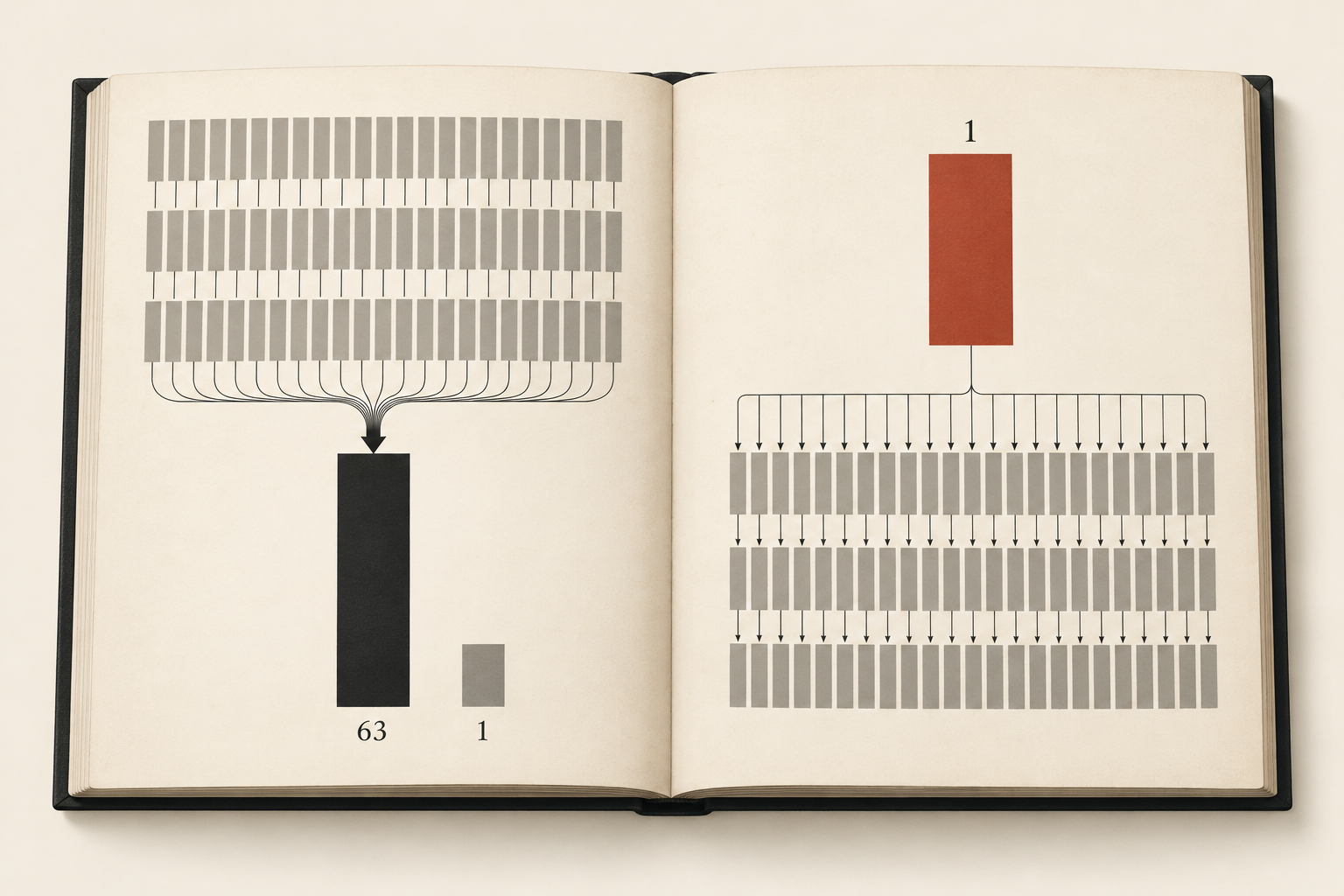
The provinces used to inflate. Until 2016 each compiled its own regional product, and the aggregate of 63 provincial economies grew at nearly twice the national rate: over 11 percent against 6.24 in 2011, with 61 provinces above the national figure, and 9.13 against 5.25 in 2012, with none below it. The General Statistics Office named the cause in print as the "achievement disease of the localities." Since 2017 it has computed every province's figure itself, in Hanoi, from provincial inputs, and by 2020 its Director-General, Nguyễn Thị Hương, could report that the aggregate provincial rate sat less than one point above GDP, down from five or six. The old trick is closed. Anyone writing that the provinces make up their numbers in 2026 has not read the 2020 review.
The growth is also where it should be. Manufacturing alone supplied a third of the nine-month increase, about 3 points of the 9.01. Exports reached 434 billion dollars, up 24.5 percent, and foreign-invested firms shipped 81 percent of that. Disbursed foreign investment, the harder number, rose 12 percent to its best nine months since 2022. The provinces at the top of the table are factory towns: Quảng Ninh's electronics output rose 80 percent, Hà Tĩnh's battery output 142 percent, and the statistics office's own explainer for the leading provinces credits FuYu, Luxshare and Samsung by name. Electricity, counting system output and imports, grew 9.3 percent against 9.01 GDP. In 2025 it had lagged GDP by more than a point; this year it keeps pace, though it still trails industrial output by three.
And nobody inside the system is pretending it is easy. Hương, now running the statistics office from inside the Ministry of Finance, said on 3 October that full-year double digits "remains a major challenge." No economist I could find at a wire service or ratings agency has disputed the print. All of that is true. None of it answers what happens when 10 percent is not a forecast but an instruction.
What a quota looks like on paper

The instruction has a paper trail, and each document converts the target into an obligation one level further down.
On 20 January, Tô Lâm told the 14th Party Congress to strive for growth of 10 percent a year or more through 2030. On 24 April the National Assembly passed Resolution 25, which for the first time in its history assigns a growth target to each locality in law. On 27 June, with the first quarter at 7.83 against a scenario of 9.1 and its own projection for the year at 8.7, the government issued Resolution 168, which raised the 2026 scenario for about twenty provinces, held the rest, and cut one. Resolution 169, the same day, told any People's Council that had voted a lower target to raise it.
Then, on 5 October, Resolution 312 assigned each province a fourth-quarter growth rate. The method is arithmetic: the fourth-quarter rate that closes each province's gap to its annual target. The provinces furthest behind received the highest orders.
| Province | 2026 target | Nine months | Q4 required |
|---|---|---|---|
| Lạng Sơn | 10.61 | 7.52 | 18.41 |
| Vĩnh Long | 10 | 7.32 | 17.25 |
| Thanh Hóa | 11 | 8.54 | 17.10 |
| Hanoi | 11 | 8.85 | 16.55 |
| Sơn La | 8 | 5.59 | 13.85 |
| Ho Chi Minh City | 10.2 | 9.06 | 13.23 |
| Hải Phòng | 13 | 12.08 | 15.39 |
| Hà Tĩnh | 10.43 | 12.36 | 5.40 (floor) |
Seventeen of 34 provinces must grow more than four points faster in the fourth quarter than they did in the first three. Nine must exceed 15 percent. The four largest economies in the country, Ho Chi Minh City, Hanoi, Hải Phòng and Đồng Nai, about 47 percent of provincial output, are all expected to miss their annual targets, according to the National Assembly's own committee.
Lạng Sơn is the worked example. Its July plan needed 12.07 in the third quarter and 14.01 in the fourth to reach 10.61. Nine months came in at 7.52, so October lifted its fourth-quarter requirement to 18.41. The same plan contains the clearest statement of what the number is for: results against the growth scenario are "an important basis for evaluating task completion, rewarding and disciplining cadres." No government resolution says that. In the parts of Resolution 312 I could read, the strongest written language is that heads of agencies must "elevate personal responsibility." The sanction is spoken instead. Prime Minister Lê Minh Hưng, 3 October: year-end results "will be the most accurate basis for evaluating, assigning and rotating cadres." Whether a target with a spoken consequence is a quota is a judgement; I think the cadre-rotation line settles it, and the reader can disagree. The quota runs below the province, too. Cư Yang commune in Đắk Lắk has its own 2026 growth scenario, with a commune product of 466.8 billion đồng rising to 513.5 billion, by quarter, and a named office to monitor it.
The people holding the orders have started saying what they think of them, on the record. Quản Minh Cường, Party Secretary of Quảng Ninh, in the National Assembly on 18 October: "Our Quảng Ninh absolutely cannot grow below 10 percent. Below 10 percent, just dismiss both the Secretary and the Chairman." And of Cao Bằng, where he was Secretary before: "Cao Bằng cannot do it. Very hard." Its fourth-quarter order is 14.86 percent, against 7.96 for nine months. Tô Lâm's own instruction to Hanoi in July was that double-digit growth is "an important political task, but do not chase growth at any cost." Both halves of that sentence are now being tested at once.
Three ways to make a number

A province cannot invent output, and it cannot set credit. What the state can do, from Hanoi, is lend it, pour it, or sell it.
Credit. This lever is national, and in headline terms it slowed in the quota year: credit grew 19.1 percent in 2025 and 16.7 percent in the year to September 2026, against a central bank target of "about 15 percent, with adjustments." What changed was not the pace but the shape of the ceiling and what sits under it. Outstanding credit is 20.75 quadrillion đồng, between 145 and 155 percent of GDP depending on who is counting, the highest in ASEAN by the World Bank's reckoning. The State Bank told the Prime Minister in August that the gap between đồng lending and đồng deposits was "about 2 quadrillion đồng." Deposits did catch up in the third quarter, from 5.6 percent growth at end-June to 9.8 at end-September against credit at 11.6, but they caught up because banks paid for them: the average listed 12-month rate across 16 banks was 8.45 percent at the end of September, up 2.63 points since January, against 5.5 percent at the large banks last year.
The central bank's response has been to redraw the ceiling rather than hold it. In late June it excluded new lending to 18 projects from the calculation of each bank's credit growth against its cap. The projects were proposed by Vingroup, Masterise and Sun Group: a Hanoi to Quảng Ninh high-speed rail line, Gia Bình airport, a Bến Thành to Cần Giờ metro, a Phú Quốc urban area, among others, with a stated capital need of 752 trillion đồng over three years, about 28.6 billion dollars. The State Bank's head of monetary policy explained the purpose on 2 July without euphemism: the mechanism creates "additional capital, directing credit to support double-digit GDP growth." In September, lending to hotels and resorts stopped counting as real estate credit for the purposes of the real estate cap. On 16 October the Ho Chi Minh City branch raised its local credit target to 16 percent. Inside the property book the mix has turned: lending to developers rose 19.6 percent in eight months while household property loans rose 1 percent. Developers borrow. Households do not.
Then, on 18 October, the State Bank ordered the price of money down while the quantity goes up: banks must cut listed deposit rates by at least half a point and lending rates for production by 1.5 to 2 points, on pain of a smaller credit quota this year and next. The same document tells them to "absolutely not lower credit standards" for large projects and not to "conceal bad debt," which is the central bank leaning against the consequences of its own carve-outs. Non-performing loans are rising in absolute terms, and real estate bad debt is rising faster than real estate credit. Within two days at least fifteen banks, Vietcombank and VietinBank among them, had cut deposit rates by 0.5 to 0.6 points, and the 12-month rate at most banks fell below 7 percent. On the first trading session after the order the VN-Index fell 1 percent and bank shares led it down, because lending was ordered down three to four times as far as deposits, and the difference is margin the banks were told to absorb.
Concrete. The public investment plan for 2026 is just over 1 quadrillion đồng assigned. By 30 September, 62.9 percent of the Prime Minister's plan had been recorded as disbursed, 13 points ahead of last year's pace. In the single week to 1 October, 76 trillion đồng was recorded, nearly two thirds of the month's total; the week after, 8 trillion. Quarter-end batching is what the new monthly scoring system was built to prevent, and the scores now feed the rating of "collectives and individuals." This is not where the flagship money went: the North-South high-speed rail had disbursed 2 percent of its 2026 allocation by June, and the Ministry of Construction's plan was cut by 63 trillion for the two railway lines in September. The sprint is provincial, local capital 74 percent disbursed against central 44. Advances count as disbursement, and the National Assembly's committee reported that unrecovered advances equal 37 percent of all public investment disbursed.
In the national accounts, gross capital formation grew 7.18 percent in the first quarter and 21.39 in the third. Final consumption grew 8.45 and 8.96. One of those components moved. The statistics office does not split capital formation into fixed investment and inventories, so part of that jump may be exporters stockpiling imported inputs, which were 94 percent of imports. That split is the one number that would settle how much of the acceleration is concrete, and it is not published.
Land. Land sales are not growth; they are what pays for it. Hanoi had collected 98.6 trillion đồng in land-use fees and rent by 8 October, 100.04 percent of its annual target, and had disbursed 115.5 trillion of public investment by 30 September, the most in the country. Quảng Ninh's land-use fees hit 100 percent of estimate in July, and land was about 53 percent of its revenue. Ho Chi Minh City set a land target of 86.6 trillion đồng for the last four months alone. The lever is weakening as it is pulled: CBRE's third-quarter Hanoi data show primary apartment prices down 9 percent on the quarter, sales down 66 percent on the year, and secondary prices falling year on year for the first time in two years. The National Assembly's committee asked the government to review its land revenue forecast "given signs of a cooling property market."
One sentence on the statistics. The move from estimate to preliminary figures is a legislated cycle, and the complaint is not that it happens but that no revision table is published: the first-quarter figure was published as 7.83, became 7.94 in July and is now 8.15, the second quarter went from 8.39 to 8.81, and the only explanation on record, from the Director-General's press conference, is that industry and construction were revised up by "adding actual construction volumes from infrastructure and real estate projects."
What the number does not say
The question for anyone holding Vietnamese assets is not whether 9 percent happened. It is what kind of 9 percent it was.
Take the statistics office's own shares. Manufacturing contributed about 3 points of the 9.01, construction under 1, services about 4. The levers do not show up as a third of GDP. They show up at the margin: industry and construction went from 8.9 percent growth in the first quarter to 10.5 in the second and 12.5 in the third, and the second quarter was revised up on construction volumes. Consumption grew 8.5 percent in nine months while capital formation grew 17.9. Retail sales grew 13.4 percent in money and 7.8 after prices, and Vietnamese reporting of the IMF's October outlook puts household consumption about 16 percent below its pre-pandemic trend. Firms completing dissolution rose 119 percent. The committee's sentence is the right one: growth is "high, but the foundation is not solid," and "growth in scale has not been matched by productivity." AMRO puts potential growth at 7.3 to 7.5 percent through 2030.
Two to three points separate the consensus from the print. Exports and foreign factories were always going to deliver the consensus. The quota decided what filled the rest, and in 2026 it was filled with lending that needed 8.45 percent deposits to fund it, public works recorded at quarter-end, and land sold into a market that has started to fall.
2027, and what runs out first

The target for 2027 is 10 percent or higher again. The budget presented on 17 October raises the deficit to 4.5 percent of GDP from about 4.1, lifts central development investment by 260 trillion đồng, and has all 34 provinces planning higher spending. Thirty are expected to commit to double digits. The plan contains no credit growth figure at all. So the useful question is which input gives out first.
Deposits, and they already have: at a price banks could pay, there were not enough of them. The 2 quadrillion đồng gap is the number the central bank chose to report, and on 18 October it moved from setting the quantity of credit to setting its price, by decree. Banks complied within two days. SSI's bank analysts wrote on 14 October that "cost of funds, rather than the credit quota, is gradually becoming the factor limiting the system's ability to expand lending." When the binding constraint stops being the ceiling and becomes the price, the quota has met the balance sheet.
Power, next. The Ministry of Industry and Trade told the Prime Minister in September that 2027 brings a shortfall of about 4,256 megawatts nationally and 5,680 in the north, and that after three years of the current power plan about 5 percent of planned capacity is operating. The plan assumes demand growth of 12 to 14 percent a year through 2030. Electricity grew 9.3 this year with no shortage, three points behind industrial output.
Inflation room, after that. Consumer prices rose 5.08 percent in September against a 4.5 ceiling, fuel tax relief runs to 31 December, and the government told the National Assembly that "room to control inflation to target is very limited."
The comparison everyone reaches for is 2008 and 2011, and it is half right. In 2007 to 2010 credit grew 25 to 40 percent a year, above 50 by some counts in 2007, and inflation peaked near 28 and 23; today credit grows 17 and inflation is 5. But private credit was roughly 85 to 115 percent of GDP then on the World Bank's series, and it is 145 to 155 now. The risk is not the pace. It is the leverage the pace is added to.
I think the forecasters will spend 2027 catching up to the order the way they spent 2026, and that the order will be met, for a while, because the state has moved every ceiling that has stood in its way so far. What I do not think is that the 10 percent of 2026 and the 10 percent of 2027 are the same thing as the 7 that the consensus expected and the factories delivered. The headline will keep saying 10. The reader should keep asking who paid for the difference, and with what.
What to watch
- The fourth-quarter print, due in early January. Whether it reaches the 12.5 percent the full-year target requires, what the third quarter gets revised to on the way, and whether the last week of December looks like the last week of September.
- The credit target. Fitch expects the State Bank to raise the 15 percent ceiling before year-end, as it did in 2025. If it does, the quota has beaten the balance sheet again.
- Deposits after document 9608. Whether deposit growth holds up at the new rates through year-end, and whether the 2027 credit quotas, when the State Bank assigns them in January, punish the banks that cut last.
- The northern grid in the 2027 dry season. Any load shedding before May converts the power shortfall from a ministry forecast into a growth constraint.
- The provincial aggregate. The statistics office stopped publishing the GRDP-weighted provincial total against national GDP after 2020. For 2026 it is the number to ask for.
Sources
| Source | Claim |
|---|---|
| National Statistics Office, Q3 and nine-month report, 3 Oct 2026 | 9.01 and 9.95 percent; sector contribution shares; expenditure components; nine-month provincial GRDP; trade, FDI, retail, firm registrations |
| National Statistics Office, Q1 report and Q2 press release, Apr and Jul 2026 | First-published quarterly figures of 7.83 and 8.39 for the revision sequence |
| VietnamPlus, 3 Oct 2026 | Director-General's explanation that the Q2 revision came from added construction volumes |
| World Bank, East Asia and Pacific Economic Update, 6 Oct 2026 | 7.4 percent for 2026, the largest upward revision in the region |
| IMF, Asia-Pacific Regional Economic Outlook, via bbw.vn, 14 to 15 Oct 2026 | 8.4 percent; household consumption about 16 percent below pre-pandemic trend |
| ADB, Asian Development Outlook, 23 Sept 2026 | 7.8 percent; credit-risk language |
| AMRO, Vietnam 2026 annual consultation report, 26 Sept 2026 | Potential growth 7.3 to 7.5 percent through 2030 |
| Bloomberg via Nation Thailand, 3 Oct 2026 | Q3 survey median 8.65 percent |
| UOB (14 Oct), Standard Chartered, OECD, HSBC, Fitch notes, Jan to Oct 2026 | Forecast table; UOB's stated reasons for its upgrade |
| Government Resolution 01/NQ-CP, Appendix II, 8 Jan 2026 | Original 2026 provincial targets |
| National Assembly Resolution 25/2026/QH16, 24 Apr 2026 | First per-province growth targets written into law |
| Government Resolutions 168 and 169/NQ-CP, 27 Jun 2026, via Hà Tĩnh portal and Hải Phòng circular | June reset of provincial scenarios; order to People's Councils to raise lower targets |
| Government Resolution 312/NQ-CP, 5 Oct 2026, via luatvietnam; Q4 table via Dân trí, Đời sống Pháp luật, Thời báo Tài chính | Q4 provincial requirements; "elevate personal responsibility" language |
| Lạng Sơn People's Committee, H2 2026 growth scenario plan, 7 Jul 2026 | 12.07 and 14.01 path; reward-and-discipline language |
| Cư Yang commune, Đắk Lắk, 2026 growth scenario, Jul 2026 | Commune-level quota document |
| VTV, 8 Jul 2026 | Tô Lâm: "do not chase growth at any cost" |
| Tuổi Trẻ, VnEconomy, 3 Oct 2026 | Prime Minister: Q4 above 12.5 percent; cadre evaluation line |
| Dân trí, Thanh Niên, 18 Oct 2026 | Quản Minh Cường at the National Assembly on Quảng Ninh and Cao Bằng |
| VOV, Tuổi Trẻ, SGGP, Đại Đoàn Kết, 17 Oct 2026 | National Assembly Economic and Financial Committee: "foundation not solid"; four largest localities to miss; advances at 37 percent of disbursement; cooling property market |
| National Statistics Office, Dec 2020; Báo Đầu tư, Dec 2020 | The 2017 centralisation of GRDP and the pre-reform gap |
| State Bank of Vietnam via Thị trường Tài chính Tiền tệ, 7 Oct 2026; VietnamBiz on the August report to the PM; MBS via kinhtechungkhoan | Credit stock and growth; 2 quadrillion đồng gap; Q3 deposit catch-up |
| Nhà Đầu Tư, Znews, Vietstock, 24 Jun to 3 Jul 2026 | Document 5386/NHNN-TD, the 18-project exemption, and the State Bank's stated purpose |
| Báo Pháp luật, Dân trí, CafeF, 18 Oct 2026 | Document 9608/NHNN-CSTT: rate-cut order, penalties, credit-standards language |
| Znews, 19 Oct 2026 | Governor Phạm Đức Ấn's meeting with the heads of 46 banks |
| CafeF, Báo Nghệ An, VietnamNet, 20 Oct 2026 | Fifteen banks cut deposit rates within two days; 12-month rate below 7 percent |
| Vietstock, DNSE, 19 Oct 2026 | VN-Index down 1 percent on the first session after the order, banks leading |
| State Bank Ho Chi Minh City branch via press, 16 Oct 2026 | Local credit target raised to 16 percent |
| MBS Research via Người Quan Sát, 19 Oct 2026 | 12-month listed deposit rate 8.45 percent, up 2.63 points |
| Cafebiz, 14 Oct 2026 | Deputy Governor Nguyễn Ngọc Cảnh on the real estate credit mix |
| Ministry of Finance report 818/BC-BTC, 3 Oct 2026; Thời báo Tài chính weekly series, 24 Sept to 8 Oct 2026 | Disbursement 62.9 percent; the 76 trillion đồng week |
| Báo Đấu thầu, 22 Sept 2026; Dân Trí, 8 Jul 2026 | Railway plan cuts; high-speed rail at 2 percent disbursed by June |
| Nhân Dân, 8 Oct 2026 | Monthly disbursement scoring feeding cadre ratings |
| CafeF, Tạp chí Kinh tế Tài chính, Thanh Niên, Aug to Oct 2026 | Land revenue for Hanoi, Quảng Ninh and Ho Chi Minh City |
| CBRE Q3 2026 Hanoi via Thanh Niên, Thời báo Tài chính, 14 to 15 Oct 2026 | Apartment price and sales decline |
| Báo Công Thương, 10 Oct 2026 | 94 percent of imports are production materials |
| SSI Research, 14 Oct 2026 | Cost of funds as the binding constraint on lending |
| Ministry of Industry and Trade report to the PM via Báo Đấu thầu, 18 Sept 2026 | 2027 power shortfall; demand-growth assumptions |
| IMF Article IV 2012, Country Report 12/165; World Bank private credit to GDP series | 2007 to 2011 credit, inflation and leverage comparison |
| EVN via VnEconomy, 7 Oct 2026 | Electricity output and imports, nine months |